Centralize Supplier Intelligence
Manage supplier profiles, shipping locations, contacts, and preferences in one operating view.
Define. Evaluate. Alert. Improve.
Catch supplier shipping violations before they create excess freight cost, receiving disruption, or inventory risk.
For manufacturers managing inbound supplier requirements, PFEP standards, and manual spreadsheet-based compliance review.
A solution built on
Bring a sample rule set or spreadsheet and explore how it could become an automated shipment compliance workflow.
01 / What the solution delivers
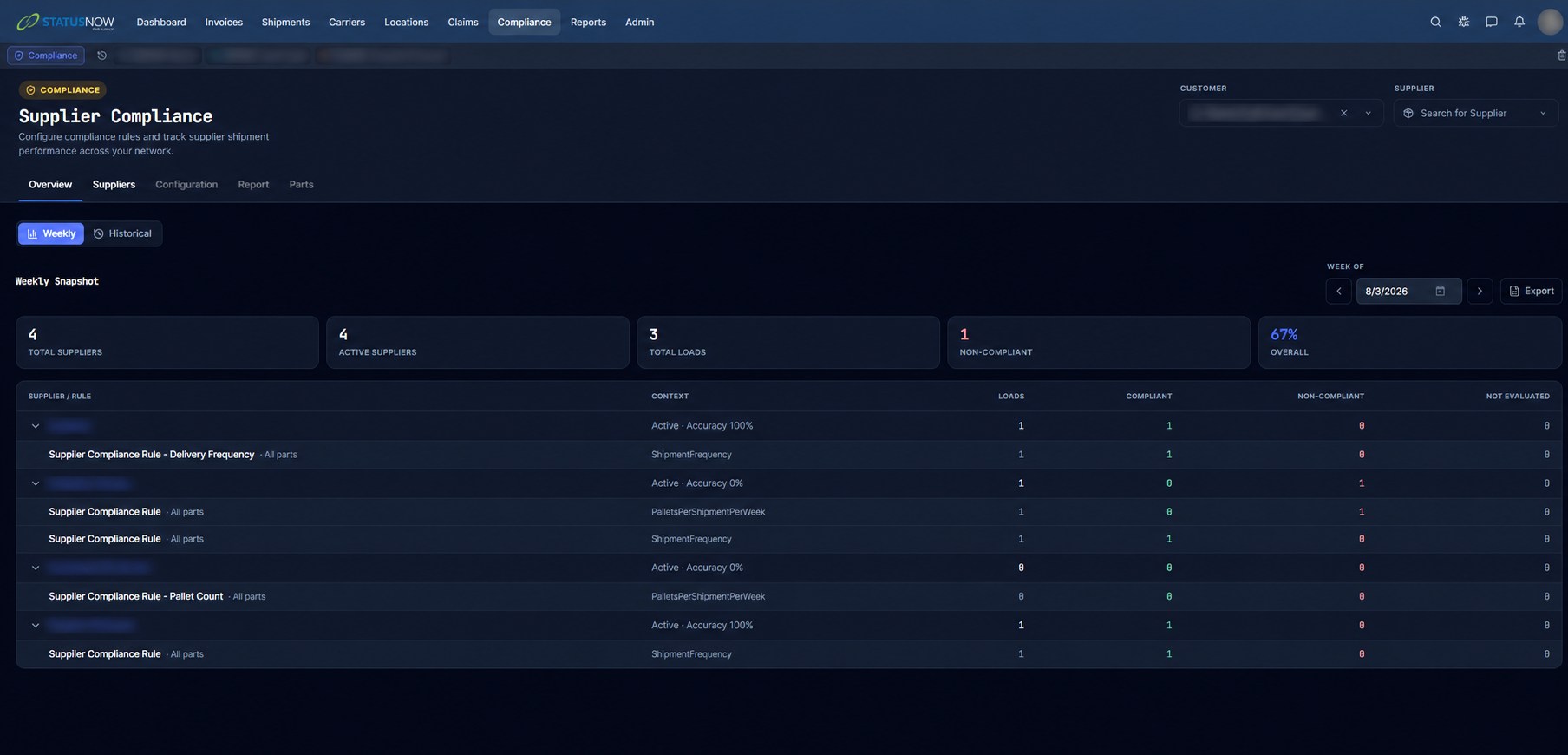
The StatusNow capability bridges the gap between spreadsheet oversight and automated execution by making supplier expectations part of the shipment workflow.
Manage supplier profiles, shipping locations, contacts, and preferences in one operating view.
Set supplier or part rules for pallets, pieces, delivery cadence, and transportation mode.
Evaluate inbound shipments as they are created and preserve detailed results for the audit trail.
Route violation alerts to the configured recipients so issues can be corrected sooner.
Track compliance rates, open violations, supplier trends, and historical performance over time.
02 / Embedded in the shipment lifecycle
From PFEP-based requirements to supplier scorecards, the workflow creates a repeatable control loop instead of another manual tracking layer.
03 / Operational expectations made testable
PFEP—Plan For Every Part—defines how each part should be shipped from each supplier. The compliance engine turns those expectations into logic the shipment workflow can evaluate.
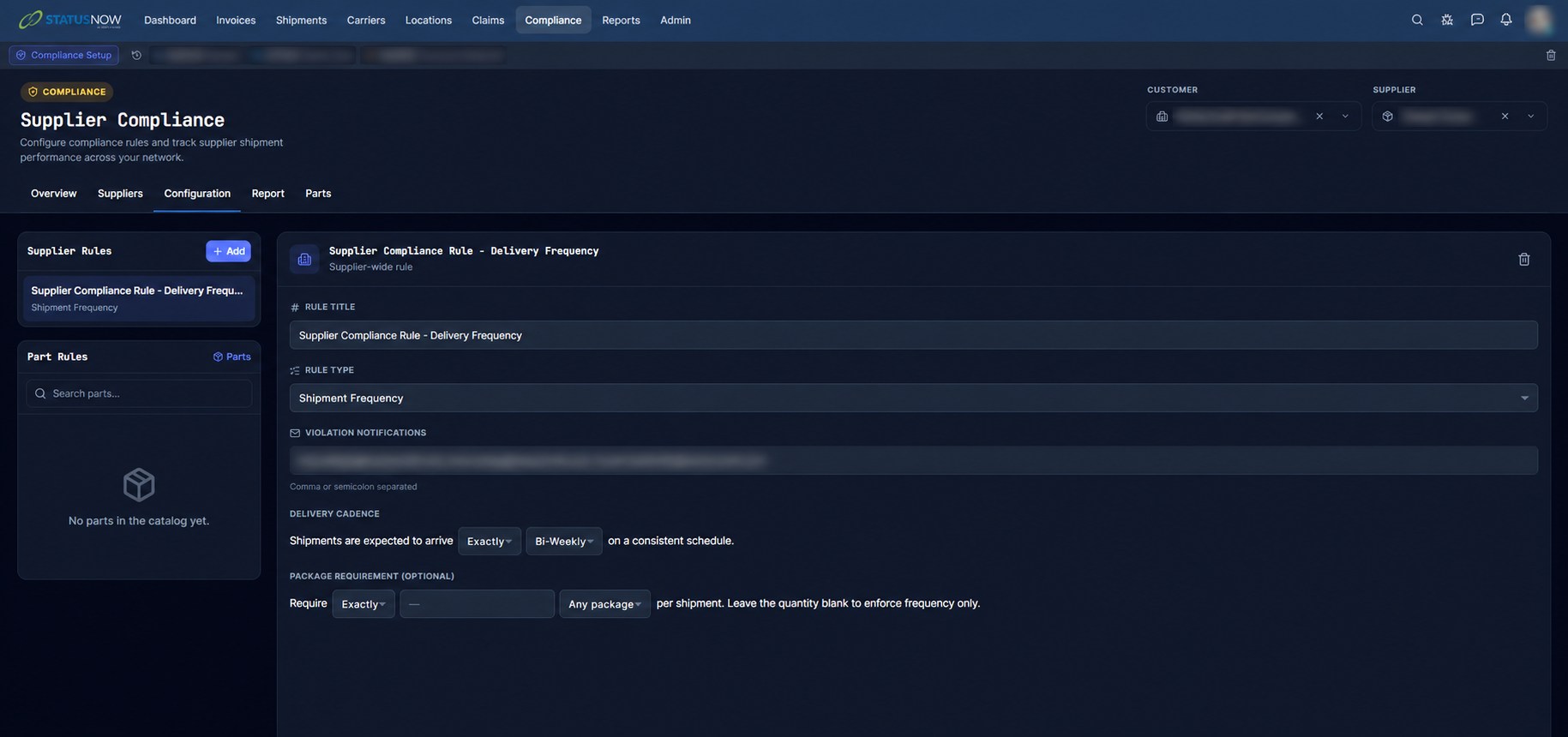
04 / Actionable visibility
Compliance status is visible on the shipment itself and rolls up into the operating metrics needed for follow-up, supplier conversations, and continuous improvement.
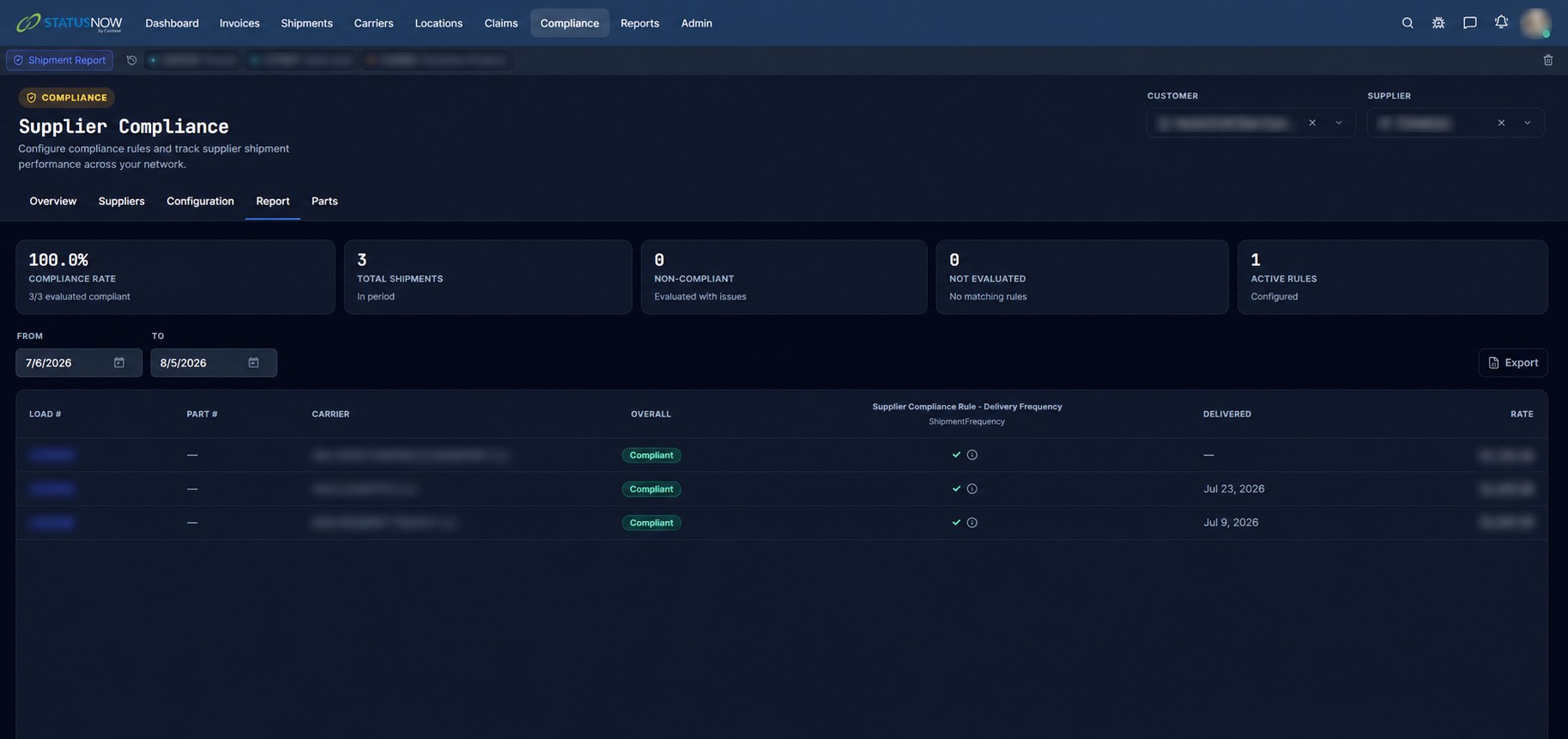
05 / A low-risk path forward
Use real operating requirements and representative shipment activity to validate the solution before defining a pilot or broader rollout.
Bring the current spreadsheet, PFEP data, or supplier shipping requirements.
Translate a representative set of quantity, cadence, and mode expectations into testable rules.
Run sample shipment activity through the StatusNow evaluation workflow.
Examine exceptions, notifications, history, and the operating view with stakeholders.
Agree on pilot scope, required integrations, success criteria, and the rollout approach.
Bring a sample rule set. We’ll explore how it could become an automated compliance workflow in StatusNow.
Request a Supplier Compliance Demo06 / The ASM difference
ASM combines the operating experience needed to define usable rules with the StatusNow platform needed to enforce and measure them.
Translate real supplier shipping expectations into clear, testable compliance rules.
Use existing shipment data and workflows instead of adding another manual tracking layer.
Surface violations early, notify the right stakeholders, and preserve the audit trail.
Turn compliance history into supplier scorecards, trend reporting, and better decisions.
Bring a representative spreadsheet or rule set and explore the solution with ASM.