Know the tank level.
Make current fuel status available without relying only on manual checks or last-minute calls.
Remote fuel monitoring
A connected view of tank levels, replenishment needs, and delivery coordination for sites where fuel availability matters.
A full-service offering for teams that need dependable visibility, proactive replenishment, and a clearer delivery workflow.
01 / The operating model
Fuel monitoring connects a site-level signal to a practical operating response: understand the level, decide when action is needed, coordinate delivery, and retain a clearer record of what happened.
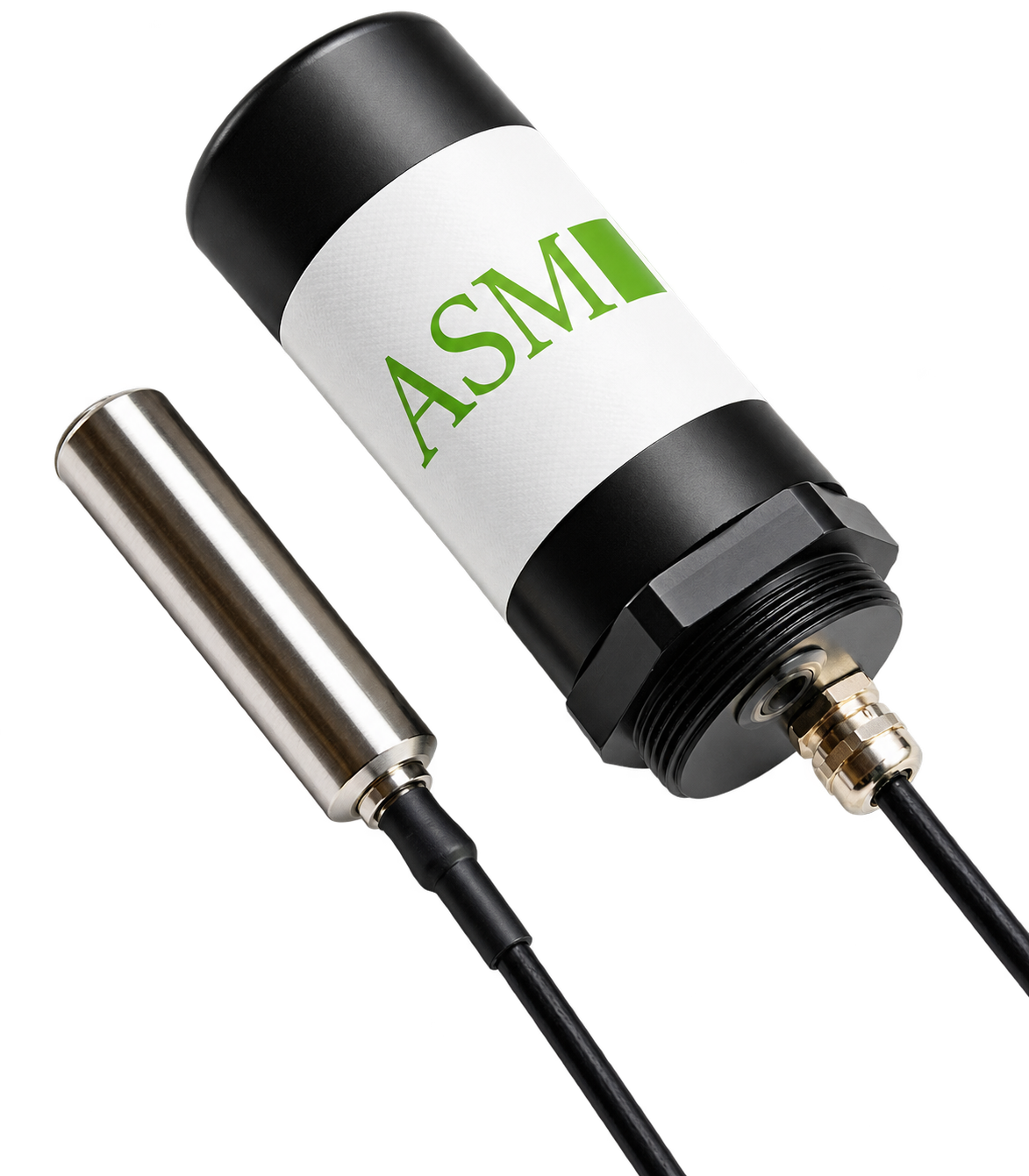
The signal starts at the tank
A tank-mounted sensor creates the remote signal that supports current-level visibility, threshold alerts, and better-timed replenishment.
Make current fuel status available without relying only on manual checks or last-minute calls.
Use agreed thresholds and operating rules to support timely, deliberate replenishment decisions.
Connect the request, dispatch, gallons delivered, and invoicing conversation in one operating view.
02 / How the signal moves
The operating flow keeps the physical delivery process intact while giving ASM and the fuel provider earlier, more actionable visibility.
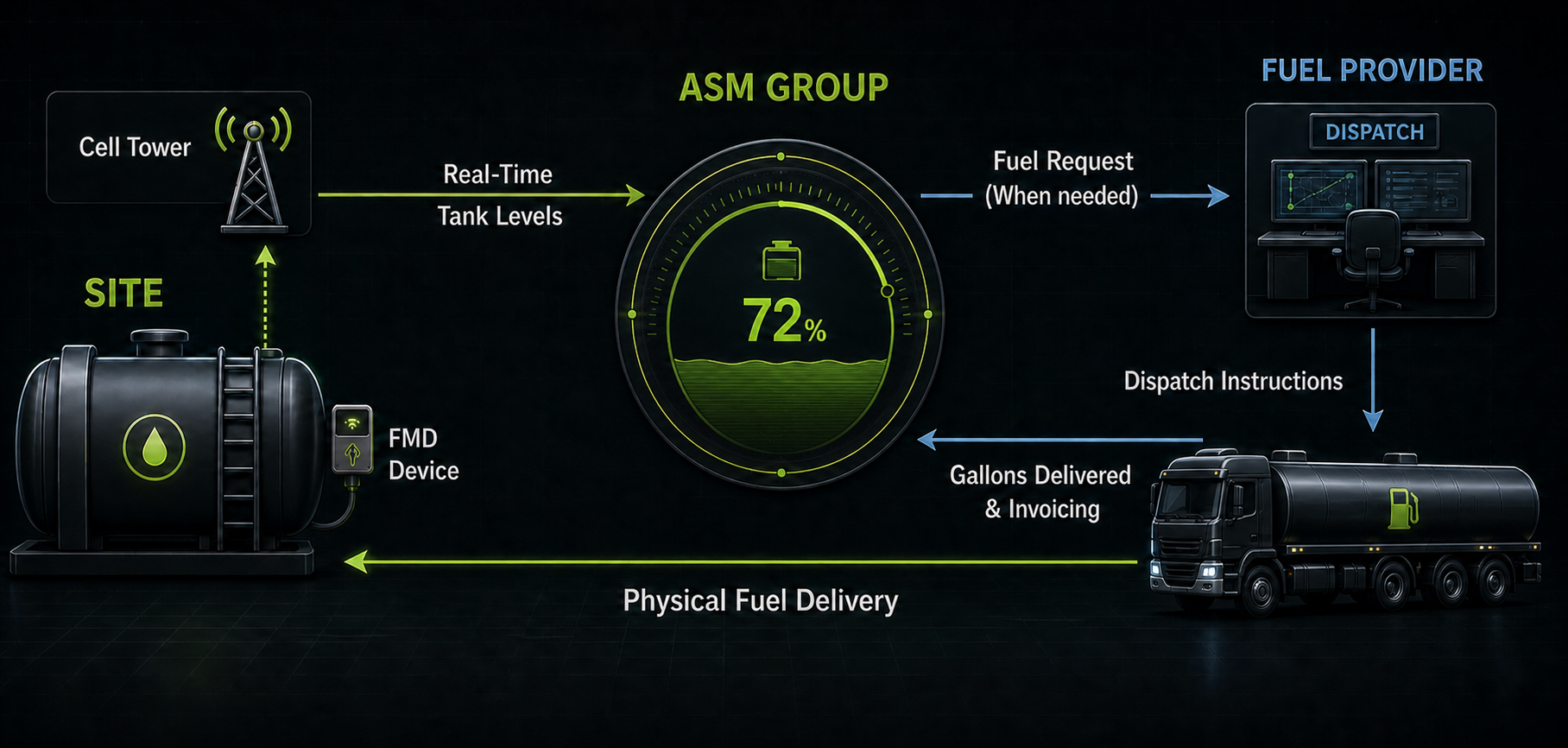
Example operating day
03 / Service model
A full-service model can connect site setup and threshold definition with signal review, delivery coordination, exception follow-up, and performance reporting.
Identify the tank, location, operating team, device, and connectivity requirements.
Agree on measurement, alert thresholds, recipients, escalation, and the delivery response.
Monitor signals, requests, deliveries, exceptions, and handoffs as part of the ongoing service.
Review visibility, response time, delivery accuracy, operating effort, and expansion opportunities.
04 / Connected capabilities
Fuel Monitoring can stand on its own or connect with the advisory and operational capabilities surrounding the rest of the logistics network.
Improve the operation
Use Logistics Intelligence to clarify roles, handoffs, integrations, and performance measures.Explore Logistics Intelligence →
Connect the operation
Connect visibility, exceptions, activity, and reporting in a shared logistics workspace.Explore StatusNow →
Connect tank visibility to replenishment action and make the next delivery decision with confidence.